A Quick Safety Routine for New Casinos: 10-Minute Checks Before You Deposit
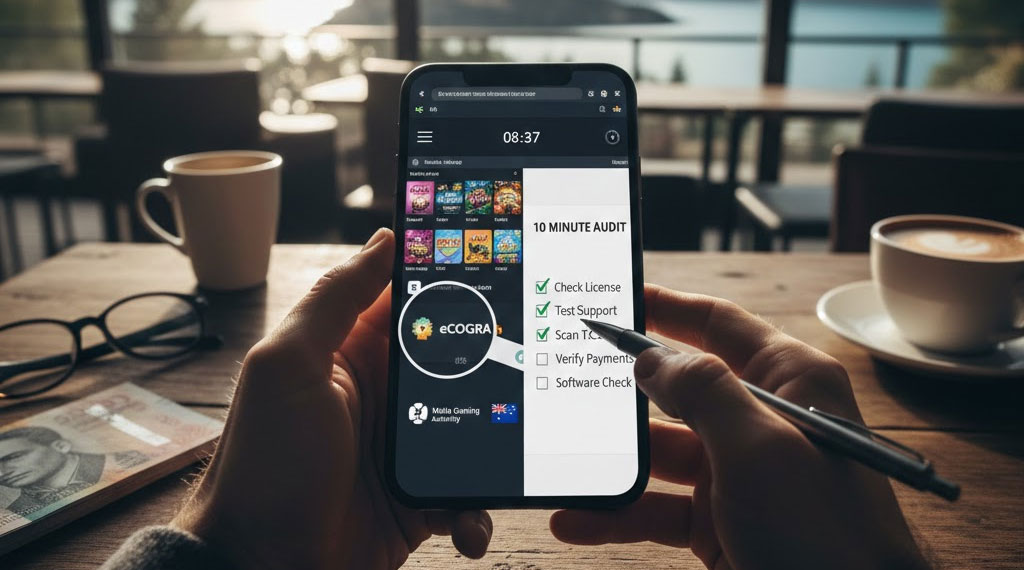
The digital landscape for New Zealand players is vast, with new online casinos appearing almost weekly. While the variety is exciting, it also increases the risk of landing on a site that doesn't prioritize player safety or fair play. Most players wait until they have a withdrawal issue to investigate a casino's legitimacy—but by then, it’s often too late. For a curated list, see minimum deposit options for NZ players.
The smartest way to play is to implement a "10-Minute Safety Routine" before you commit a single dollar. This systematic audit allows you to spot red flags that polished marketing tries to hide. Here is your quick-fire checklist to ensure a casino is worthy of your trust.
Minute 1-2: The License and Regulation Audit
Every legitimate casino must be licensed by a recognized regulatory body. This is your first line of defense.
-
The Action: Scroll to the very bottom of the casino's homepage (the footer). Look for the logo of the Malta Gaming Authority (MGA), the UK Gambling Commission (UKGC), or Curacao eGaming.
-
The Pro Move: Don’t just look at the logo; click it. A valid license logo should be a direct link to the regulator’s official website, showing a "Live" or "Active" status for that specific operator. If the logo is just a static image that doesn't link anywhere, close the tab immediately.
If you’re comparing promos, start with free spins bonus list (NZ).
Minute 3-4: The "Real Person" Support Test
A "cowboy" casino will often hide behind automated bots or unresponsive email addresses. A safe casino invest in real-time human support.
-
The Action: Open the Live Chat window and ask a specific, non-generic question. For example: "Do you accept NZD for both deposits and withdrawals, and are there any currency conversion fees?"
-
What to Look For: You aren't just looking for the answer; you’re looking for speed and quality. If you are stuck in a queue of 50 people or receive a scripted response that doesn't answer the question, it indicates that the casino is understaffed or disinterested in player service.
Minute 5-6: The Terms and Conditions (T&C) "Sniff Test"
You don't need to read every word, but you must check the "Deal Breakers."
-
The Action: Use Ctrl+F (or 'Find on Page' on mobile) to search the T&C page for keywords like "Maximum Withdrawal," "Dormant," and "Wagering."
-
The Red Flags: * Low Withdrawal Limits: If a casino limits you to withdrawing only $2,000 a week, they may struggle with liquidity.
-
Predatory Dormancy Clauses: Some sites charge "maintenance fees" if you don't log in for just 30 days.
-
Vague Payout Timelines: If the terms say payouts can take "up to 21 business days," they are likely trying to stall you in hopes that you'll play the money back.
-
Minute 7-8: Payment Method and Currency Verification
For New Zealanders, payment friction is a major safety indicator.
-
The Action: Go to the "Banking" or "Cashier" page. Verify that they offer recognized, secure methods like Visa, Mastercard, or trusted e-wallets like Neteller or Skrill.
-
The Kiwi Context: Check if they support local-friendly options like Poli or instant bank transfers. More importantly, ensure you can set your account currency to NZD. Playing in USD or EUR as a Kiwi adds a layer of currency conversion costs and makes it harder to track your actual spending—safe, player-centric sites will always offer local currency support.
Minute 9: The Software Provider Check
A casino is only as good as the games it hosts. Reputable software providers like Games Global (Microgaming), NetEnt, and Pragmatic Play do not partner with unlicensed or "scam" casinos.
-
The Action: Browse the game lobby and look for the logos of these industry giants.
-
The Pro Move: Open a popular slot (like Starburst or Wolf Gold) and check the game info/help file within the slot itself. It should list the RTP (Return to Player) percentage. If a site is hosting "bootleg" or pirated versions of games, the help files will often be missing or look different from the official versions you've played elsewhere.
Minute 10: Search for the "Real" Reputation
The final minute is about seeing what your fellow Kiwis are saying.
-
The Action: Perform a quick Google search for "[Casino Name] + complaints" or "[Casino Name] + withdrawal issues."
-
The Context: Take individual "I lost money" complaints with a grain of salt (sometimes people are just frustrated by a loss). Instead, look for patterns. If multiple players are complaining about "unanswered verification emails" or "confiscated winnings due to vague terms," that is a pattern you cannot ignore.
The "Gut Check"
If the casino passes these six steps, you have significantly reduced your risk. However, the golden rule of safety is to always start with a "test deposit"—the smallest amount allowed (usually $10 or $20). Use this to test the actual speed of the software and the verification process.
Safety in online gaming isn't about being lucky; it's about being diligent. By spending 10 minutes on this routine, you ensure that when you do hit that big win, you’re playing at a place that will actually pay you out. For trial-style offers and the common rules, read no deposit bonus terms (NZ).